Narrative Historian | Author | Journalist
Ukraine: A Nation Forged in Struggle
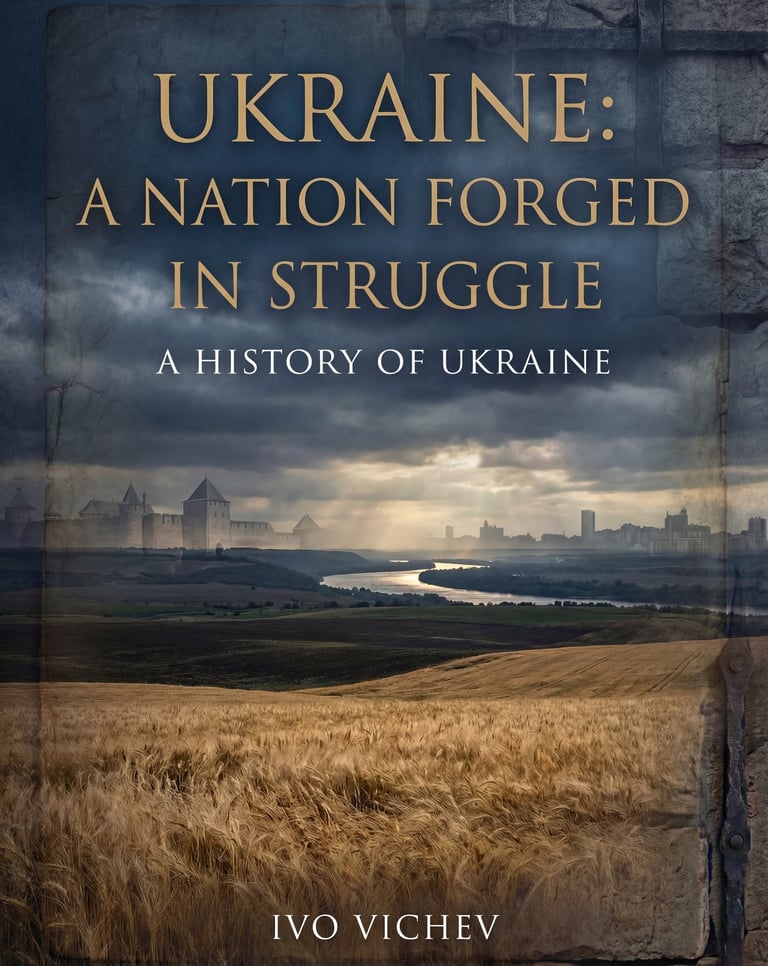
Ukraine is not a crisis. It's not a buffer zone. It's not a province that wandered off. It is a nation — one that has been told it doesn't exist by every empire that ever tried to swallow it. And yet every single one of those empires is gone. Ukraine is still here.
Ukraine: A Nation Forged in Struggle tells you why.
It starts on the steppe. Prehistoric cultures, Scythian riders, then Kyivan Rus' — the medieval state that Moscow later claimed as its origin story while Ukraine lived it. When the Mongols burned Kyiv to the ground in 1240, they didn't destroy Ukraine. They just started the clock on the next chapter.
What followed was centuries of other people's empires. The Polish-Lithuanian Commonwealth. The Cossack Hetmanate — Ukraine's wildest, most ungovernable attempt at self-rule. Then the Russian Empire absorbed it piece by piece, banned the Ukrainian language, and declared there was no such thing as a Ukrainian nation. The Habsburgs held the west. Ukraine existed in the space between empires that didn't want it to exist at all.
The nineteenth century brought a national awakening. Poets and scholars — Shevchenko above all — turned language into resistance. After the First World War, Ukraine made its bid for independence. It failed. Brutally. The country was carved up again.
Then came Stalin. The Holodomor — the engineered famine of 1932–33 — killed millions of Ukrainians. Not by accident. By policy. The book does not look away from this. Then the Second World War rolled over Ukraine twice — the Wehrmacht heading east, the Red Army heading west — and left the country shattered. More Ukrainians died in that war than the entire military death toll of Britain, France, and the United States combined.
Soviet rule continued for another half century. Russification. Chernobyl. The slow suffocation of identity. And then in 1991, without a single shot fired, Ukraine voted for independence. Ninety percent in favour. Even Crimea voted yes.
What followed was messy. Corruption, oligarchs, a political class that couldn't decide whether it faced east or west. But the people kept deciding. The Orange Revolution in 2004. The Maidan Revolution in 2014 — where Ukrainians died on their own streets for the right to choose their own future. Russia's answer was immediate: Crimea annexed, Donbas invaded.
The final chapters deal with what came next. The war that the world pretended wasn't a war until it became impossible to ignore.
This book doesn't romanticise Ukraine. It doesn't need to. The actual history is extraordinary enough. A nation told for centuries that it doesn't exist, that keeps proving otherwise — at a cost that should make anyone paying attention stop and reckon with what sovereignty actually means.