Narrative Historian | Author | Journalist
Meet Ivo Vichev
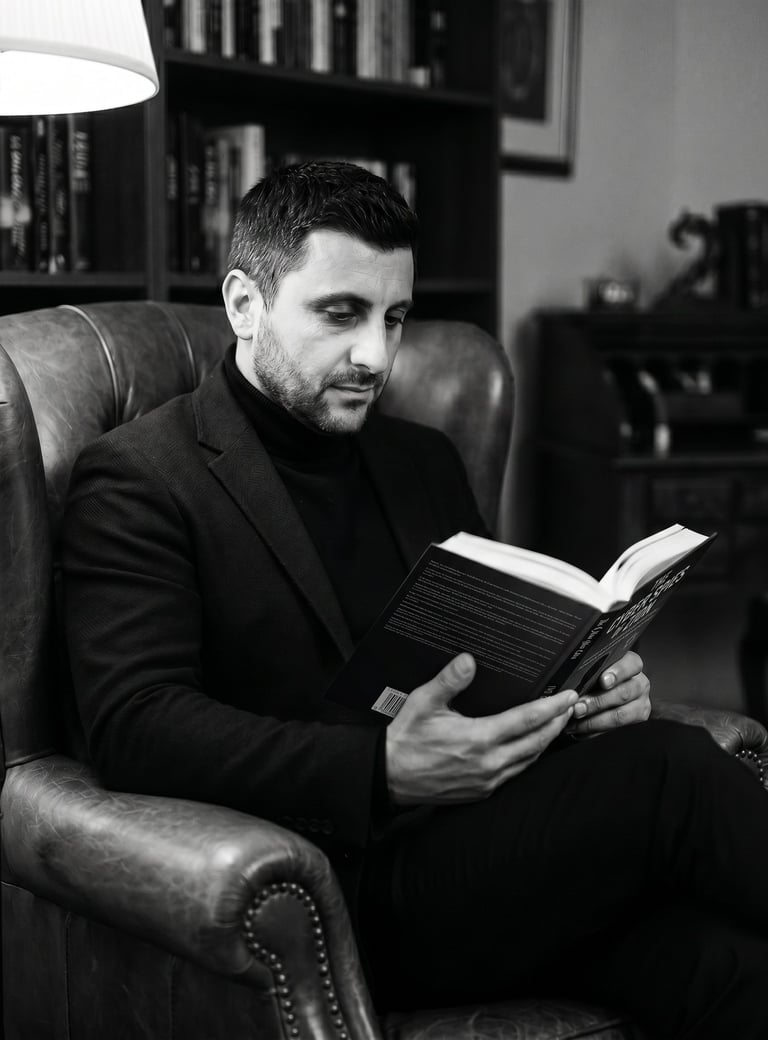

I write history as it was lived — through documents, decisions, and human consequences. My work focuses on war, intelligence operations, and political power, reconstructed from records rather than myth.
Why I Write History This Way ?
I grew up in Varna, Bulgaria — a country that spent forty-five years under communist rule, then lurched into a transition that brought hyperinflation, corrupt privatisation, political assassinations, and a state apparatus that renamed itself without dismantling itself. History was not something I studied from a safe distance. It was the air in the room. The official version never matched what people remembered.
Later, in Warsaw, I studied history and public relations at the Polish Academy of Sciences. Warsaw is a city rebuilt on ruins, where memory is never abstract. It forces you to confront how history is remembered, simplified, or forgotten.
Like many historians, I spent years immersed in academic texts — precise, rigorous, and often lifeless. The facts were correct, but the experience of history was missing. Wars became timelines. Political struggle became terminology. The human decisions dropped out under the weight of dead prose.
That changed when I encountered writers who treated history as something lived rather than listed — Tuchman, McCullough, Atkinson, Caro. From that point, I committed to a different approach: put the life back into serious history without loosening the evidence standard.
The archive stays. The discipline stays. The factual burden stays. What changes is the writing.
Method, Not Myth
This archive is built on records — declassified files, testimonies, cables, reports, and decisions made under pressure.
I am not interested in hero worship or simplified narratives. Intelligence work leaves paper trails, not legends. Wars are shaped by hesitation, miscalculation, and unintended consequences — not clean stories written after the fact.
My work reconstructs events as they unfolded — before outcomes were known, before narratives were fixed, and before history was cleaned for public memory. When the record shows massacre, repression, or deception, I name it. Explanation is not the same thing as excuse.