Narrative Historian | Author | Journalist

Stalingrad 1942-43: The Brutal Turning Point on the Eastern Front
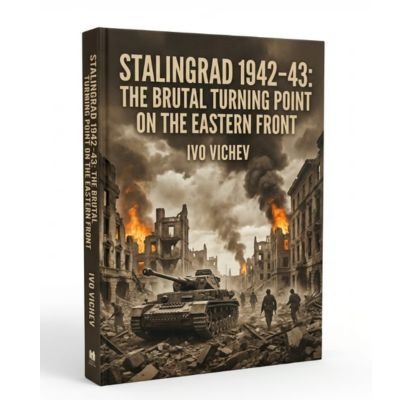
Stalingrad 1942–43: The Brutal Turning Point on the Eastern Front is a gripping, narrative history of one of the most decisive and brutal battles of World War II. Written specifically for history enthusiasts rather than academic specialists, it delivers a clear, immersive account of the Battle of Stalingrad while still respecting the complexity of the Eastern Front.
This Stalingrad book takes you from Hitler’s fatal decision to split his forces and drive toward both the Caucasus oil fields and the city on the Volga, straight through to the final surrender of the German 6th Army. You see how political obsession, overextended supply lines, and fragile Axis alliances set the stage for catastrophe long before the first German soldiers entered the streets of Stalingrad. The campaign unfolds step by step: the advance across the steppe, the Luftwaffe’s devastating bombing raids that turned the city into a smoking ruin, and the transformation of factories, apartment blocks, and cellars into improvised fortresses.
Inside the city, Stalingrad 1942–43 plunges you into the reality of Rattenkrieg—the “war of the rats”—where combat is fought room‑to‑room and floor‑to‑floor, often at point‑blank range. You follow soldiers on both sides as they fight in the Tractor Factory, Barrikady, and Red October steel works, across Mamayev Kurgan, and along the frozen banks of the Volga. The book shows how the Luftwaffe’s attempt to crush Stalingrad from the air actually created the perfect defensive landscape of rubble and ruins for the Red Army.
Beyond the front line, this World War II history also highlights the brutal importance of logistics and supply. The Volga lifeline, the night crossings under artillery fire, the desperate German reliance on Göring’s promised airlift, and the impossible mathematics of trying to feed and arm an entire army by air are all laid out in accessible, engaging prose. You see how winter, hunger, fuel shortages, and disease became as deadly as any Soviet tank or artillery barrage.
The turning point comes with Operation Uranus, the Soviet counter‑offensive that shatters the Romanian‑held flanks and encircles nearly 300,000 Axis troops. The book explains how Soviet planning, deception, and concentrated armour transformed the situation almost overnight, trapping the 6th Army in a tightening pocket around Stalingrad. From there, Stalingrad 1942–43 follows the failed German relief attempt (Operation Winter Storm), the collapse of the airlift, the freezing months inside the kessel, and the final days in the cellars and bunkers beneath the ruins.
Alongside the military story, this Stalingrad history explores the human and psychological dimensions of the battle: the mindset of Hitler and Stalin, the dilemmas of commanders like Paulus, Chuikov, and Manstein, the experiences of factory workers turned fighters, nurses and doctors in makeshift hospitals, women operating anti‑aircraft guns, and ordinary infantrymen reduced to scavenging for survival in a frozen, starved city. It also looks at what came after: the staggering casualty numbers, the political and strategic impact of the defeat on Nazi Germany, the boost in Soviet confidence, and how Stalingrad was later used in propaganda and memory on both sides of the Iron Curtain.
If you’re searching for a Battle of Stalingrad book that is detailed but readable, rich in narrative but grounded in solid history, Stalingrad 1942–43: The Brutal Turning Point on the Eastern Front is designed for you. It’s ideal for readers who enjoy World War II history, Eastern Front campaigns, and military storytelling that combines strategy, logistics, and human experience in one continuous, compelling story.