Narrative Historian | Author | Journalist
A 3,000-Year History of The Jewish People
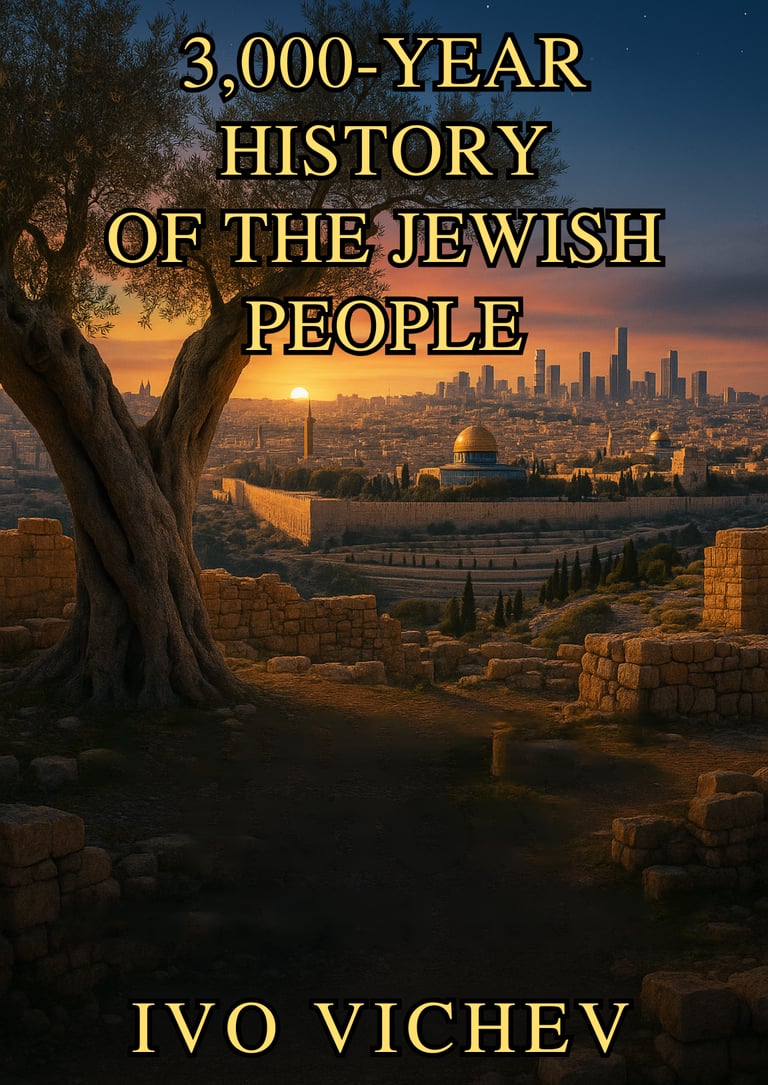
Three thousand years. No homeland for most of it. Every major empire in Western history tried to assimilate, expel, or exterminate them. And yet Jewish civilisation didn't just survive — it shaped the moral architecture of the world. That demands explanation, not sentiment.
The Story of the Jewish People provides it.
It begins not with Abraham but with the Late Bronze Age Canaanite world — the actual archaeological ground zero. A fragmented group of Iron Age villagers in the highlands of Canaan who, against every reasonable expectation, forged something no civilisation had produced before: ethical monotheism. One God. One law. A covenant not with a king but with a people. That idea changed everything that came after it. Everything.
The book traces what followed without flinching. The kingdoms of Israel and Judah — smaller, weaker, and more politically precarious than the biblical narrative suggests. The Babylonian exile that should have ended the story but instead produced the Torah as we know it. A people who lost their state and responded by building something more durable than any state: a portable civilisation made of text.
Then Rome. The destruction of the Second Temple in 70 CE scattered Jewish life across the known world. And here the book does something most histories don't — it follows both threads simultaneously. The Diaspora didn't produce one Jewish civilisation. It produced several. Sephardic Jews in Islamic Spain experienced a Golden Age of philosophy, poetry, and science while Ashkenazi communities in northern Europe built an entirely different culture around Talmudic scholarship, Yiddish, and communal survival under increasingly hostile conditions. These were parallel worlds, connected by text and law, separated by language, custom, and geography.
The medieval chapters are honest about what coexistence actually looked like — and what its collapse cost. Expulsions from England, France, Spain. The ghettos. The blood libels. Centuries of a civilisation maintaining itself through sheer intellectual discipline and communal structure while the world outside those walls grew steadily more dangerous.
The modern section tracks the fracture. Enlightenment emancipation promised integration. Some Jews embraced it fully. Others built new movements — Hasidism, Reform Judaism, secular Jewish socialism, Zionism — each a different answer to the same question: how do you remain Jewish in a world that finally lets you stop?
Then the catastrophe that made every previous persecution look like a rehearsal. The book addresses the Holocaust directly and without redemptive framing. There is no silver lining in the murder of six million people. What there is, is what came after — the establishment of Israel in 1948, a state born from ashes and immediately contested, and the moral and political complexities that followed.
The final chapters deal with the contemporary moment head-on. Israel and Palestine. The American Jewish experience. The tensions between secular and religious identity. The debates that define Jewish life right now — because a civilisation built on argument doesn't stop arguing just because it finally has a state again.
This book draws on the Amarna Letters, the Cairo Geniza, and the latest Israeli, Palestinian, and Western scholarship. It doesn't celebrate uncritically or critique reflexively. It tells the story as it happened — messy, extraordinary, unfinished.
Three thousand years of a people who carried their civilisation in texts when they couldn't carry it in territory. If you want to understand how that worked, and why it still matters, start here.